Best time to visit Bali from India — month by month

Almost every guide will tell you the same thing: visit Bali in the dry season, April to October, and you’re sorted. It isn’t wrong. It’s just lazy. For a traveller flying in from India, the question isn’t only when the weather is best — it’s when the weather is good in Bali and the prices haven’t doubled and the beach clubs aren’t three-deep at the bar. Get those three to line up and you’ve found the real best time to go.
We plan Bali trips for Indian travellers all year round, and the honest answer is that the “best” month depends on what you’re optimising for. So let’s do this properly — by season first, then month by month — and end with a clear recommendation instead of a shrug.
Bali has two seasons, not four
Bali sits eight degrees south of the equator, which means there is no winter, no autumn and no spring. There is a dry season and a wet season, and that’s the whole calendar. Temperatures barely move all year — daytime highs hover around 29–31°C whether you go in January or July. What changes is the rain, the humidity and, crucially for your budget, the crowds.
The dry season runs roughly April to October. The wet season runs November to March. The shoulders between them — April and October — are where the smart money goes, and we’ll come back to why.
One thing the calendar does not need to factor in any more is paperwork. As of 2026, Indian passport holders get visa-on-arrival in Bali for IDR 500,000 (around ₹2,800), extendable once. So timing your trip is about weather and price, not a visa queue — a genuine luxury compared to a decade ago.
The dry season (April–October): what to expect
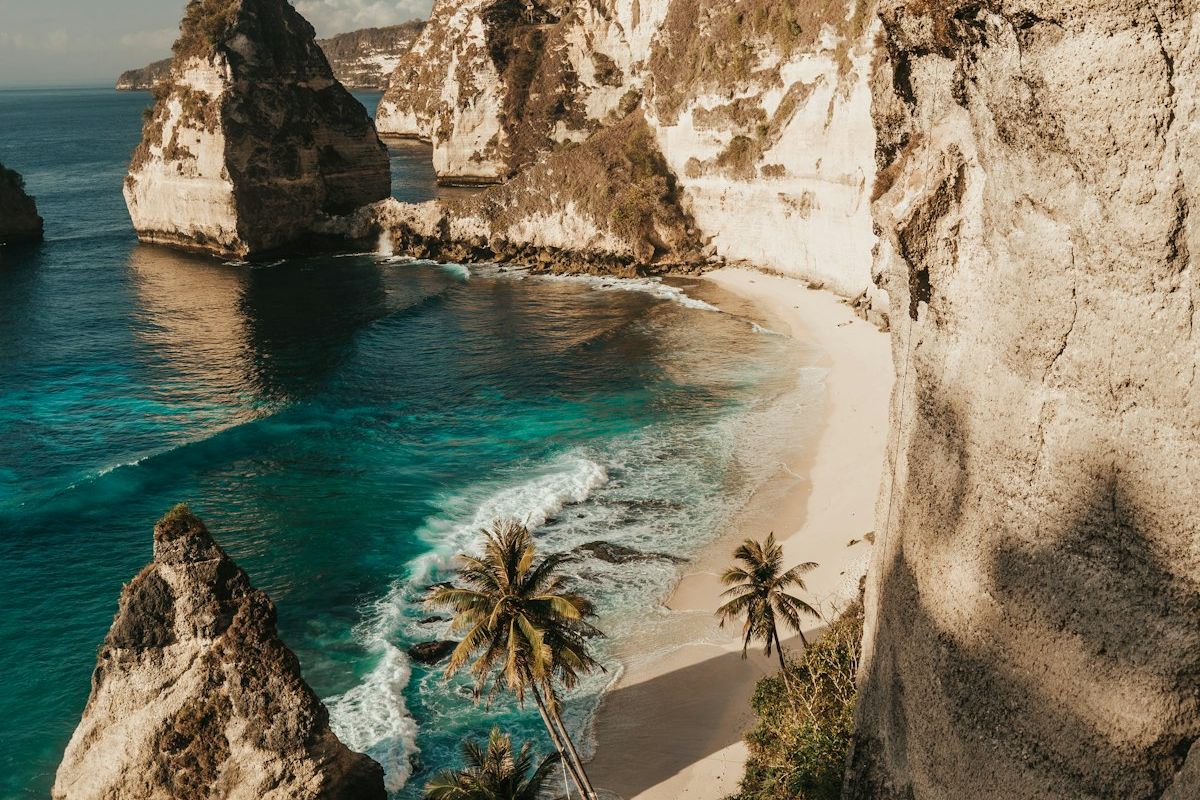
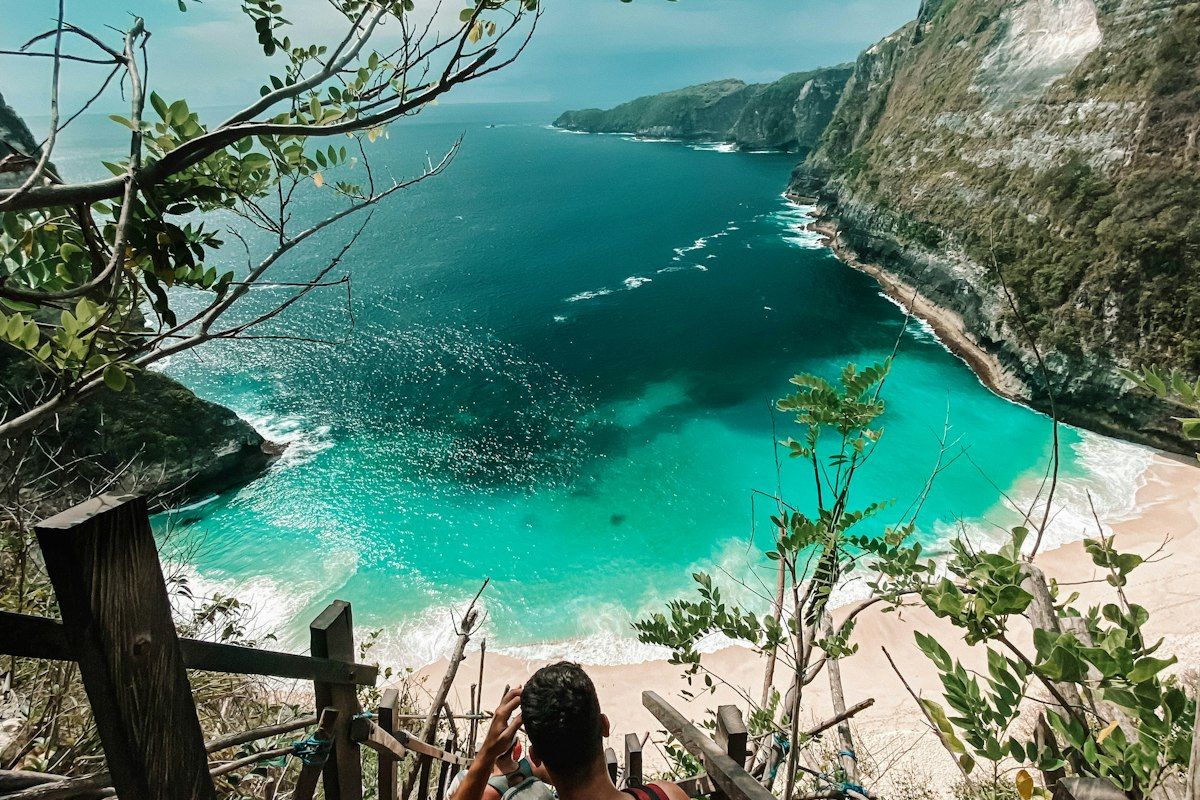
This is the postcard Bali. Blue skies most days, low humidity, calm seas on the south and east coasts, and the kind of evenings that were built for a sundowner in Uluwatu. Surfers get clean swell on the Bukit peninsula, divers get visibility off Amed and Nusa Penida, and the rice terraces around Ubud are at their greenest in the first half of it.
The catch is that everyone knows this. July and August are peak — not because of the weather, which is identical to June and September, but because that’s when Europeans and Australians take their long holidays. Villa rates climb, Seminyak gets loud, and a table at the popular Canggu cafes needs a plan. If you can travel in the dry season but dodge those two months, you get the same sunshine for noticeably less money.
It’s worth knowing that Bali isn’t one weather system, either. The south — Seminyak, Canggu, Uluwatu, the beaches most first-timers want — is the driest and sunniest. Ubud, up in the hills, is greener and a few degrees cooler, and catches more cloud and the odd shower even in the dry months. The east, around Amed and Sidemen, is drier and quieter still. So “dry season” means reliably good weather across the whole island, which is exactly why it’s the safe bet if you’re trying to see several regions in one trip.
The wet season (November–March): not a write-off
Here’s where we break with the standard advice. The wet season in Bali is not a monsoon that cancels your holiday. It’s tropical rain — usually a heavy downpour in the afternoon that clears in an hour or two, leaving the island washed, green and quiet. Mornings are often bright. The rain is the price you pay; the empty beaches and lower rates are what you get for it.
A wet-season morning in Ubud — mist coming off the terraces, half the cafes still empty — is one of the most underrated experiences in Southeast Asia.
There are real trade-offs to be honest about. January and February are the wettest, with the odd multi-day spell and rougher seas that can muddy the water for diving. Some boat crossings to the Gili Islands and Nusa Penida get cancelled in bad weather. If your heart is set on snorkelling in glassy water, this is not your window. But for a couple who mainly want a villa, a pool, spa afternoons and good food without a crowd, the wet season is quietly brilliant value — it’s the time of year when a private luxury villa that would be fully booked in July is both available and a fraction of the price.
Month-by-month: the honest breakdown
April and May — the sweet spot
If we could book every client into one window, it would be this one. The rain has packed up, the landscape is still lush from the wet season, the crowds of July are months away and the prices reflect it. Seas are calming down for diving. May in particular is our top pick: dry, green, affordable and uncrowded. For most Indian travellers juggling a long weekend plus a few days of leave, late April into May is the best all-round time to be in Bali.
June to September — peak weather, peak crowds
The driest, sunniest stretch of the year, and everyone in the southern hemisphere knows it. June and September are the clever picks here — you get peak-season weather on the edges of the rush, before and after the July–August spike. If you must travel in the school summer holidays, book your villa and your popular restaurants well ahead, and consider basing yourself in quieter Sidemen or Amed rather than Seminyak.

October — the other sweet spot
The mirror image of April: the crowds have thinned, the weather is still mostly dry, and rates soften before the year-end bump. October is an excellent, slightly under-the-radar time to go — our second-favourite month after May.
November and December — shoulder into wet
Rain starts creeping back in November, but it’s usually still manageable and the island is lovely and green. Then the last ten days of December turn into a price peak all of their own — Christmas and New Year draw a big crowd and rates spike hard, wet weather or not. If you’re chasing the year-end break, book early and brace for premium pricing.
January to March — the deep wet season
The wettest, most humid stretch, and the cheapest. Go in if you want green hills, spa days, empty beaches and a villa that costs a fraction of July’s rate — and you don’t mind planning around afternoon rain. Skip it if water sports and island-hopping are the point of your trip.
One date to plan around: Nyepi
There’s a single day each year that catches travellers out, and it’s worth knowing about before you book. Nyepi, the Balinese Day of Silence, marks the Hindu New Year and falls in March — in 2026 it lands on 19 March. For 24 hours the entire island shuts down: no flights in or out of Denpasar, no traffic, no shops, lights kept low after dark, and guests expected to stay within their hotel or villa. It is genuinely beautiful — a whole island deliberately quiet — but it is not the day to arrive, leave or plan an excursion.
For Indian travellers there’s an added layer of interest here: Bali’s Hindu culture, its temple festivals and its offerings will feel both familiar and distinct, and the days around Nyepi (the Ogoh-ogoh parades the night before) are a spectacle. Just build your itinerary so the silent day is a rest day in the villa, not a transit day.
The best time for a Bali honeymoon
Honeymooners usually want two things that pull in opposite directions: reliable sunshine and a sense of privacy. The dry-season shoulders — May and October — thread that needle better than any other months. You get clear skies for the beach-club afternoons and the cliffside dinners, without the July crowd turning every romantic spot into a queue.
If you’re weighing Bali against the obvious alternative, the Maldives — we wrote a separate, opinionated piece on Bali versus the Maldives for a honeymoon that’s worth a read before you commit. The short version: the Maldives wins for pure beach-and-villa seclusion, Bali wins for couples who want variety in the same trip. And when you’re ready to turn a date into an actual plan, our honeymoon planning is built exactly for this — matching the month to the mood you want.
When to book — and how far ahead
For the sweet-spot months — May and October — aim to book six to eight weeks out. Villas in the best pockets of Ubud, Uluwatu and Sidemen are a limited resource, and the good ones go first even outside peak season. For July, August and the Christmas–New Year window, treat three months ahead as the minimum, and earlier if you have a specific property in mind.
The other reason to plan ahead is flights. Fares from Indian metros to Denpasar swing a lot with the season and with how early you book; locking the dates lets us build the rest of the trip around the best-value routing. If you’d rather not juggle all of this yourself, that’s the whole point of a custom itinerary — you tell us the window and the vibe, and a human does the matching.
Our short version, if you want one line to remember: go in May or October for the best balance of weather, price and space; go June or September if those don’t suit; embrace the wet season for value if water sports aren’t your priority; and book the popular windows early.
Frequently asked questions
Do I need a visa for Bali from India in 2026?
No advance visa is needed. As of 2026, Indian passport holders get visa-on-arrival in Bali for IDR 500,000 (around ₹2,800), valid for 30 days and extendable once. Carry a passport valid for at least six months and a return or onward ticket.
Which months are the cheapest to visit Bali?
January to March — the deep wet season — are the cheapest, with villa rates well below peak. The best value with good weather is May and October, the dry-season shoulders, when prices are reasonable but skies are mostly clear.
Is the wet season really that bad?
No. It usually means a heavy afternoon downpour that clears within an hour or two, not all-day rain. Mornings are often bright. The main trade-offs are rougher seas (which can affect diving and boat crossings) and higher humidity. For a villa-and-spa style trip, it’s excellent value.
When are the fewest tourists in Bali?
The wet season, January to March, is quietest overall. Within the dry season, April, May, June, September and October are far less crowded than the July–August peak while offering similar weather.
How many days do you need in Bali?
Five to seven nights is the sweet spot for a first trip — enough to pair a few days in the south (beaches, cliffs, beach clubs) with two or three in Ubud (rice terraces, temples, spas) without rushing. Add nights if you want to island-hop to Nusa Penida or the Gilis.
Is Bali a good first international trip for Indian travellers?
Yes. Visa-on-arrival, a short-to-medium flight, English widely spoken in tourist areas, a favourable exchange rate and easy vegetarian food make it one of the smoothest first overseas trips from India — for couples, families and solo travellers alike.