Bali vs Maldives for honeymoon: an honest comparison from a Delhi travel agent

I’ve been planning honeymoons out of Delhi for years, and there are two questions I’m asked more than any other. The first is “Bali or Maldives?” The second, usually a beat later, is “which one will my partner actually love?” This piece is my honest answer to both — not a diplomatic “it depends,” but the real recommendation I’d give you across the desk.
Both are wonderful. I’ve sent delighted couples to each. But they are not the same holiday, and choosing wrong — not a bad destination, just the wrong one for you — is the single most common honeymoon regret I see. So let me lay it out the way I would if you were sitting in front of me with a chai.
The one-line version, before we get into it
If you want to switch off completely — water, villa, spa, each other, and almost nothing else to decide — the Maldives is your trip. If you want variety in the same honeymoon — beaches and temples and rice fields and a night out and great coffee — then Bali wins. Hold that thought; everything below is just me showing my working.
What an Indian honeymoon actually costs in each
Let’s talk money first, because it quietly decides this for a lot of couples. The Maldives is a premium destination by design. The model is one-island-one-resort, so once you’re there, you’re spending at the resort — meals, drinks, the seaplane transfer, the excursions, all at resort prices. A genuinely good Maldives honeymoon for an Indian couple usually starts around ₹1.5 lakh per person for a week and climbs steeply from there once you add an overwater villa and a meal plan.
Bali plays a completely different game. You can do Bali beautifully on a mid-range budget — a private pool villa in Seminyak or Ubud that would be a fantasy price in the Maldives is genuinely affordable here — and you can also spend lavishly if you want a clifftop estate in Uluwatu. That flexibility is Bali’s superpower. For couples who want their honeymoon to feel luxurious without the bill that usually comes with it, Bali is, in my experience, unbeatable value.
So the budget rule of thumb I give people: if ₹1L-plus per head is comfortable and you want it spent on seclusion, Maldives. If you’d rather that same money buy you a longer, fuller trip — or you simply want a smaller bill — Bali.
Maldives: the case for one island and nothing else
The Maldives does one thing, and does it better than anywhere on earth: it removes the world. You fly into Malé, take a seaplane over that absurd blue water, land at a single small island, and that’s your honeymoon. No taxis, no deciding where to eat, no “what should we do today” — the day is the beach, the villa, the reef off your deck, and dinner. For couples who are exhausted from the wedding and want pure, uncomplicated rest, nothing beats it.
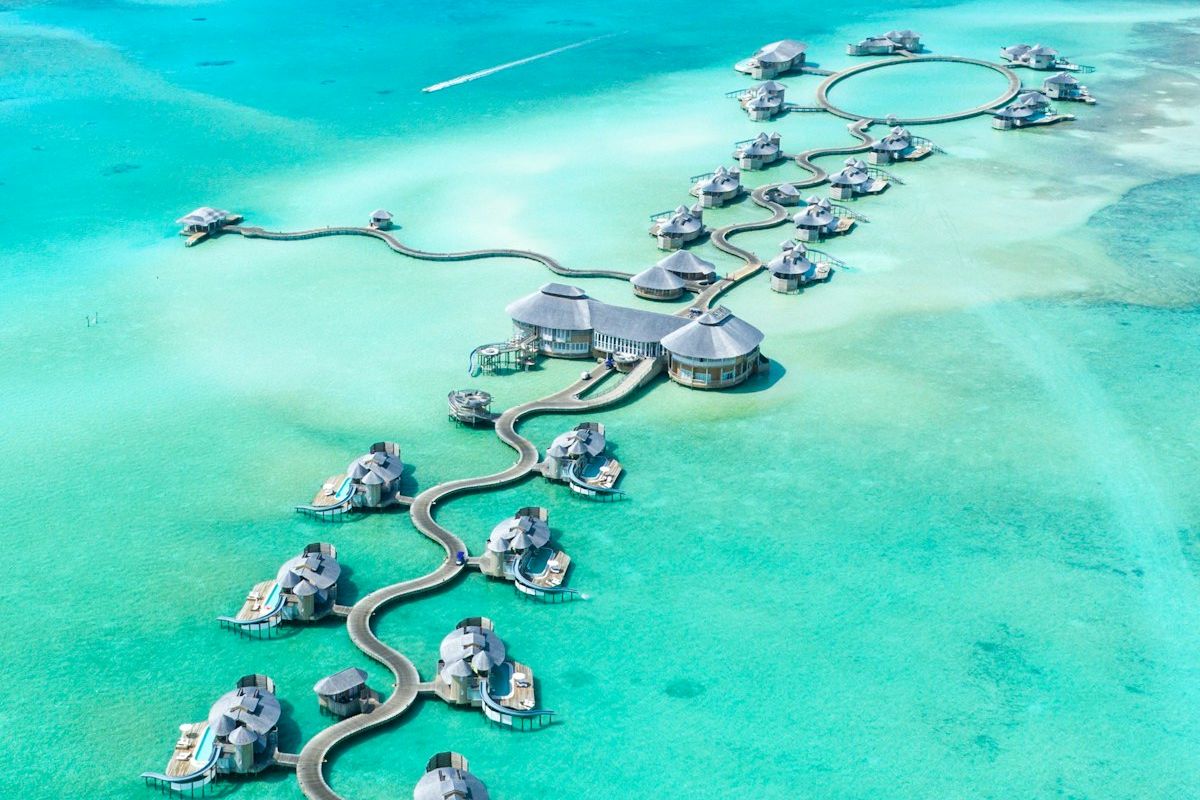
The honeymoon-specific magic is real here, too — overwater villas with glass floors, private sandbank dinners, the snorkelling literally off your steps. And there’s good news on paperwork: as of 2026, Indian passport holders get a free visa-on-arrival in the Maldives, so there’s nothing to arrange in advance beyond the trip itself.
The honest downside? It can feel still. If you and your partner are the kind of couple who get a little restless after three days on one beach, the Maldives’ greatest strength becomes its limitation. There is, deliberately, nowhere to go.
Bali: the case for variety
Bali is the opposite proposition: one trip, many moods. You can spend three nights in the south among the beaches, beach clubs and the Uluwatu cliffs, then move up to Ubud for rice terraces, temples, waterfalls, a cooking class and spa afternoons in the hills. A Bali honeymoon has a narrative arc — it goes somewhere — and for couples who’d be bored on a single island, that variety is the whole point.
It’s also far more sociable. There are restaurants to choose between, sunset bars, markets, day trips. If your idea of a great holiday includes discovering places together rather than being served the same view for seven days, Bali delivers that. And the food culture — from warungs to world-class fine dining — gives you something the Maldives, by its closed-resort nature, simply can’t.
The trade-off is that Bali asks a little more of you. There’s travel between regions, traffic in the south that can test your patience, and more decisions to make. That’s exactly why couples who choose Bali often hand the planning to us — so the variety stays a pleasure and doesn’t become a logistics project.

A typical day in each — because that’s what you’re really choosing
Forget the brochures for a second and picture the actual rhythm. A typical Maldives day looks like this: wake up to the lagoon, breakfast with your feet almost in the water, a snorkel off the deck, a long lazy lunch, an afternoon that dissolves into a spa treatment or a nap, sunset drinks, dinner under the stars. Repeat. It is, gloriously, almost the same every day — and for a tired couple straight off a wedding, that sameness is the whole medicine.
A typical Bali day refuses to sit still. One morning is sunrise at a temple, the next is a cooking class, the next is a waterfall hike or a surf lesson, the afternoon might be a beach club or a quiet villa pool, and the evening is a real choice between a dozen restaurants. No two days repeat unless you want them to. If reading those two paragraphs made one of them sound like heaven and the other sound like effort, you already have your answer — and that gut reaction is more reliable than any pros-and-cons list.

Food, flights and jet lag from India
On food, Bali wins comfortably for most Indian couples — more variety, easy vegetarian and Indian options, and a genuine dining scene. The Maldives feeds you very well, but within your resort and at resort prices; if food is a big part of how you travel, factor that in.
On flights, both are reachable from the major Indian metros, but the journeys differ in feel. The Maldives is the shorter hop, and crucially there’s almost no time difference, so no jet lag eating into a short honeymoon. Bali is a longer trip and a couple of hours ahead, though once you land it’s a simple drive from the airport rather than the onward seaplane hop the Maldives usually involves. Neither is a dealbreaker; I mention it because for a five-night honeymoon, the Maldives’ shorter, jet-lag-free journey is a genuine point in its favour.
If visas and paperwork across destinations are on your mind for future trips too, our rundown of visa-free and visa-on-arrival destinations from India in 2026 covers both of these and more.
Which one is right for you?
Here’s how I actually decide it with couples. Choose the Maldives if: you want total rest over activity, a ₹1L-plus per-head budget is comfortable, you have five to seven nights, and the dream image in your head is an overwater villa and an empty horizon.
Choose Bali if: you want variety and discovery, you’d like your budget to stretch further or simply be smaller, you have seven nights or more to do it justice, and you’re the sort of couple who’d rather be slightly busy than slightly bored. If you lean Bali, my companion guide on the best time to visit Bali from India will help you pick the month.
And if you’re still genuinely torn — which is completely normal — that’s the best possible reason to talk to a human. Our honeymoon planning exists precisely for this conversation; we’ll ask the handful of questions that settle it and then build the trip around your answer.
Frequently asked questions
Is the Maldives more expensive than Bali for an Indian honeymoon?
Generally yes. The Maldives’ one-island-one-resort model means most spending happens at resort prices, and good honeymoon trips usually start around ₹1.5 lakh per person for a week. Bali can be done beautifully for considerably less, with far more flexibility at every budget.
Do Indians need a visa for Bali or the Maldives in 2026?
Both offer visa-on-arrival to Indian passport holders as of 2026 — free in the Maldives, and around IDR 500,000 (₹2,800) in Bali. No advance visa is required for either; carry a passport valid six months and a return ticket.
Which is better for a short 5-night honeymoon?
The Maldives, usually. It’s a shorter flight with virtually no time difference, so you lose no days to jet lag, and the single-island format means zero internal travel. Bali rewards seven nights or more because you’ll want to see more than one region.
Is Bali too busy or touristy for a honeymoon?
Only if you base yourself in the busiest spots in peak season. Choose the quieter pockets — Uluwatu’s clifftops, the Ubud hills, the east coast — and travel in the shoulder months, and Bali feels romantic and unhurried. Planning the route is what keeps it that way.
Can you combine Bali and the Maldives in one trip?
You can, and a few couples do — Bali first for the variety, the Maldives second to collapse on a beach. It needs more time (ideally 10–12 nights) and a bigger budget, but as a once-in-a-lifetime honeymoon it’s spectacular. We’re happy to cost it both ways.
Which has better food for Indian travellers?
Bali, for most people — more variety, easy vegetarian and Indian options, and a real dining scene to explore. The Maldives feeds you very well but within your resort. If food is central to how you travel, that difference matters.